
The English you need at the airport
Travel
The English you need at the airport
From the immigration line to a missed connection: the questions you will hear and the answers that get things done.
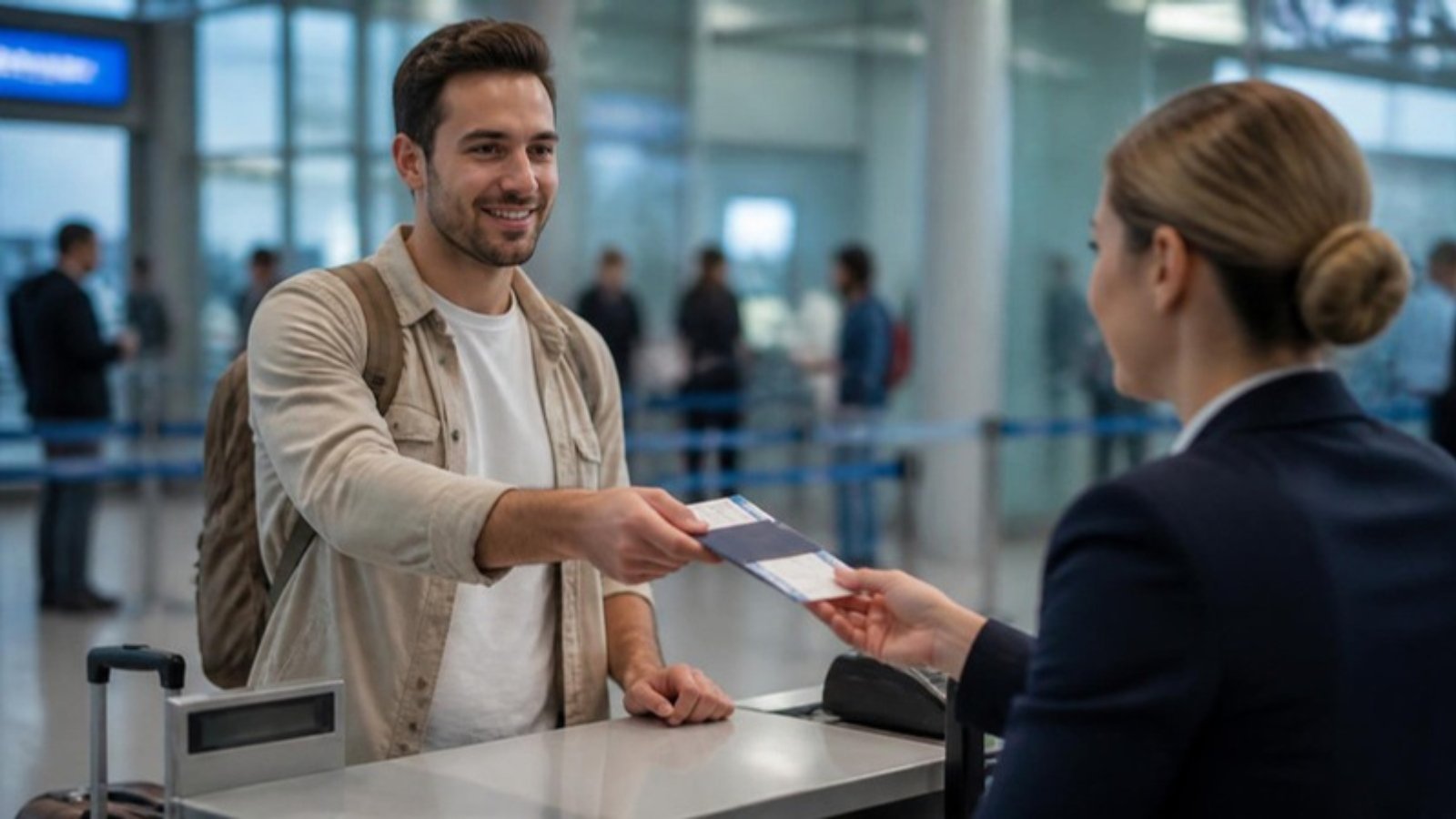
The airport is where your travel English is tested first, and it is also where nerves run highest: there is a line behind you, an officer in a hurry and a very specific vocabulary that nobody uses anywhere else.
The good news is that this vocabulary is small and predictable. The questions are almost always the same, in the same order.
At check-in
You will hear: Window or aisle?, Any bags to check?, Did you pack your bags yourself?
Answers that are enough: Window, please. / Just one bag. / Yes, I did.
At security
Instructions will come fast and in a commanding tone — it is not rudeness, it is routine. Take off your shoes and belt. Laptops out of the bag. Empty your pockets. Step forward. Arms up.
You barely need to speak here. You need to understand.
At immigration
This is the part that causes the most anxiety, and the one that benefits most from rehearsal. The standard questions:
What is the purpose of your visit? — answer in two or three words: Tourism. / Business. / Visiting family.
How long will you stay? — Two weeks.
Where are you staying? — have the hotel name and address at hand.
Do you have a return ticket? — Yes, I fly back on the fifteenth.
Short, direct answers are what is expected. Long explanations sound like you are justifying something, and they tend to lead to more questions.
When something goes wrong
Here is the vocabulary nobody teaches and everybody needs at some point:
My flight was cancelled. What are my options?
I missed my connection. Can you rebook me?
My luggage didn't arrive. Where do I file a report?
Could you repeat that more slowly, please? — this is the most useful sentence on the whole list, and the one students resist using the most out of embarrassment. Nobody minds repeating.
What to practice before you fly
It is not grammar. It is listening comprehension at real speed and readiness to answer. Simulating the immigration line out loud, with someone asking the questions at the pace they will really come, does more than weeks of written exercises.
Traveling soon?
The English for Travel track simulates the airport, hotel, restaurant and the unexpected — in the time you have before you leave.
See the Travel track